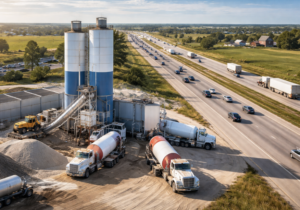
Iowa is a state that depends on movement. Families head out for weekend drives, travelers cross the state on major corridors, farmers and freight carriers rely on dependable pavement, and communities count on strong roads to stay connected. Travel in Iowa is not held together by luck. It is supported by planning, maintenance, and the kind of construction infrastructure that most people never stop to think about until a road project begins or a smoother, safer stretch of highway makes the drive easier.
That is where Iowa Concrete Batching Plants enter the picture. These facilities help make the concrete that supports road construction, highway improvements, bridge approaches, intersections, parking areas, and other travel-related surfaces that keep daily life and long-distance travel moving. In a state where official tourism channels continue to promote scenic road trips and trip planning, strong road infrastructure is not just useful. It is part of the travel experience itself. Travel Iowa continues to position road travel as a major part of discovering the state, and the state’s official travel guide is still being actively promoted to help people plan trips across Iowa.
Why Reliable Roads Matter to Iowa Travel
Roads do more than connect point A to point B. In Iowa, they support tourism, commerce, agriculture, events, and everyday community life. When a traveler plans a route to a lake town, a downtown festival, a state park, or a college city, the trip depends on roads that are built to handle repeated use, seasonal stress, and ongoing maintenance demands. That makes concrete supply an important part of the broader travel story, even if it happens behind the scenes.
The scale of Iowa’s transportation network makes that even clearer. According to Wikipedia’s overview of the Iowa Primary Highway System, the state is served by more than 10,000 miles of primary roads, with the Iowa Department of Transportation responsible for day-to-day maintenance of the primary network. That kind of mileage requires constant attention, which is why access to dependable concrete production matters so much for both new builds and improvement work.
How Concrete Batching Supports the Roads Travelers Depend On
Concrete batching plants matter because roadwork depends on consistency. A road surface, intersection, curb system, shoulder, median barrier, or bridge-related structure cannot be treated like an afterthought. Materials must be measured, mixed, and delivered with precision so crews can meet engineering expectations and keep projects moving on schedule. That is especially important when travel demand remains steady and road closures need to be managed carefully.
Concrete production also supports the kind of long-term road performance travelers rarely think about in the moment. People notice whether a road feels rough or smooth, whether an entrance ramp seems safer, whether an intersection handles traffic better, or whether a travel corridor looks well maintained. They may not think about the plant that supplied the mix, but that facility plays a real role in how that finished roadway performs over time. In practical terms, batching plants help translate transportation plans into durable surfaces the public can actually use.
Road Construction Is Part of Iowa’s Current Travel Reality
This is not theoretical. Iowa’s official transportation channels regularly publish updates showing how active road improvement work remains across the state. The Iowa DOT news page currently includes notices about bridge replacements, lane work, intersection projects, and interstate-related closures in March 2026. Those updates show that road travel in Iowa is constantly being managed, improved, and adjusted in real time. Travelers see the result in detours and lane shifts, but those same projects are part of the long-term effort to keep the statewide system dependable.
The Iowa Department of Transportation also maintains a dedicated roads and highways section that highlights construction, maintenance, safety features, and winter operations as core parts of the state highway system. That matters because travel does not stay healthy without regular investment. Concrete-related infrastructure supports that work by helping supply the materials needed for projects that strengthen routes people rely on every day.
Travel Confidence Starts with Better Infrastructure
Trust in a travel destination is shaped by experience. A state can market attractions, events, and road trips, but the real test comes when people start driving. Are the roads clear, functional, and well maintained. Are major routes being updated responsibly. Are travelers given the tools they need to plan around closures, weather, and work zones. Iowa has built a strong public-facing system around that idea.
The official Iowa 511 platform gives travelers access to statewide traffic information for interstates, U.S. routes, and state highways, including road conditions and traffic cameras. That kind of public travel resource reinforces the fact that road infrastructure is not just built and forgotten. It is actively monitored and communicated. Concrete production facilities support the physical side of that equation by helping ensure the roads being monitored are also being built and improved with dependable materials.
Why This Matters for Tourism, Business, and Local Communities
Good roads are not only about transportation departments and contractors. They affect how Iowa is experienced by visitors and how communities compete for attention, spending, and repeat travel. When people use the official 2025 Iowa Travel Guide to plan destinations, events, and route ideas, they are stepping into a travel ecosystem that depends on roads functioning well enough to support those plans. Welcome centers, rest areas, scenic drives, local attractions, and multi-city itineraries all become more accessible when the transportation system is cared for consistently.
That same principle applies to business. Hotels, restaurants, retail districts, venues, and attractions benefit when roads are easier to travel. Local economies do better when freight can move, visitors can arrive without frustration, and regional traffic patterns remain manageable during improvement work. The value of concrete batching plants is not limited to construction crews. Their impact reaches outward into the travel economy, regional reputation, and community convenience.
Winter Conditions Make Durable Road Planning Even More Important
Iowa travelers know that road quality is not tested only in warm weather. Winter puts pressure on surfaces, maintenance systems, and travel decision-making. The Iowa DOT’s page about winter road conditions explains that the 511 system provides statewide road condition information to help people make safer travel decisions, with updates during the winter reporting season and coverage focused on interstates, U.S. highways, and state highways.
That matters because roads in a four-season state have to be built with real-world use in mind. Freeze-thaw cycles, snow response, moisture, and heavy traffic all increase the need for strong construction standards and thoughtful material supply. Concrete plants support that broader standard by making it possible for transportation and construction teams to build and repair with greater consistency. Stronger infrastructure does not eliminate bad weather, but it does help a state stay more resilient when weather becomes part of the travel equation.
The Bigger Picture Behind the Pavement
When people think about travel, they usually picture destinations, not materials. They think about reaching a game, a conference, a family visit, a state park, or a weekend trip. What they do not usually picture is the network of planners, engineers, transportation officials, construction crews, and material suppliers that make those journeys smoother. Yet that network is exactly what gives a state its travel reliability.
Concrete batching plants belong in that conversation because they are part of the supply chain behind visible public infrastructure. They help support the roads that feed into tourism corridors, support interstate travel, connect rural and urban areas, and keep daily transportation from becoming more difficult than it needs to be. In a state where road trips, regional travel, and official traveler information remain a visible priority, that role deserves more attention than it usually gets.
Conclusion
Iowa travel depends on more than maps and destinations. It depends on roads that can carry people safely and efficiently across the state, through communities, and toward the experiences Iowa continues to promote. Behind those roads is a construction story that includes planning, maintenance, public updates, and dependable concrete production.
Concrete batching plants may not be the most glamorous part of travel, but they are one of the practical reasons travel keeps working. They help support the pavement, roadway improvements, and transportation projects that allow Iowa to stay connected, accessible, and ready for the next trip. When the roads are stronger, travel feels easier, communities feel closer, and the state is better positioned to keep moving forward.